

Quick answer
Start with power, setpoint, operating mode, ventilation, and lid closure. Then give the fridge enough time to cool a known load while monitoring the actual compartment temperature. If an error code returns, the compressor never starts, or the cabinet cannot approach the setpoint under reasonable conditions, follow the model manual and contact support.
A fridge can display a low number without the food being that cold. The control panel may show the selected setpoint, the temperature near an internal sensor, or a delayed reading. It does not necessarily represent the warmest item in the basket.
The opposite is also true: opening the lid and feeling warm air does not prove the refrigeration system has failed. Warm food, hot ambient air, and repeated openings can keep the air temperature unstable while the cabinet pulls down.
Diagnose one variable at a time. Randomly changing battery-protection levels, ECO/MAX mode, setpoint, cable, and power source makes the result harder to interpret.
Fast checks before changing anything
Record the current state first:
- power source and connection type;
- set temperature;
- refrigerator or freezer use;
- ambient temperature;
- how long the fridge has been running;
- whether the contents started cold or warm;
- control-panel reading;
- any error code;
- whether the fan or compressor can be heard;
- whether the plug, socket, or adapter is warm.
Then check these basics:
- Confirm the display is on and the setpoint is below the current temperature.
- Confirm the fridge is not in a mode that disables or delays cooling.
- Close the lid completely and remove anything trapped in the gasket.
- Clear all compressor and condenser vents.
- Use the supplied power lead or another manufacturer-approved connection.
- Check the source voltage and outlet rating under load when you can do so safely.
- Read the exact model’s manual before interpreting an error code.
For perishable food, the FDA recommends a refrigerator temperature of 40°F or below and a freezer temperature of 0°F. If the time above a safe temperature is unknown, follow food-safety guidance rather than relying on smell or appearance.
Is the fridge receiving stable power?
A lit display does not prove that the compressor has enough voltage to start. The electronics may operate while voltage drops at the moment the compressor demands more current.
Common power-path problems include:
- an accessory outlet with a low current limit;
- a loose cigarette-lighter-style plug;
- a long or undersized extension cable;
- corrosion inside the socket;
- a partially charged battery;
- a power station’s 12V port shutting down;
- an AC inverter entering power-saving mode;
- a damaged DC cord or adapter.
Try a known compatible source using the manufacturer’s cable. If the fridge works on household AC but not from the vehicle, the refrigeration system may be fine and the issue may be in the DC circuit.
If the plug, socket, cable, or adapter becomes hot, stop using it. Do not fit a larger fuse or bypass protection. The power guide explains the difference between direct DC, AC-inverter operation, and auxiliary power.
Is the target temperature and operating mode correct?
Confirm whether the display shows:
- the selected setpoint;
- the current sensor temperature;
- a zone-specific reading;
- ECO or MAX mode;
- a battery-protection setting;
- an error code rather than temperature.
On a dual-zone model, check both zones separately. A reversed assumption about which display controls which compartment can make one side appear defective.
Also consider the temperature unit. A setpoint of 32°F is very different from 32°C. Accidental unit changes are uncommon but easy to rule out.
ECO and MAX modes usually change compressor behavior or power strategy, not the fundamental setpoint. Do not expect MAX mode to overcome blocked ventilation or an inadequate power source.
For freezer use, allow a longer pull-down period and avoid interpreting a temporary plateau as failure. The model’s ambient and operating limits still apply.
Are the vents blocked or the fridge installed too tightly?
A portable fridge removes heat from the cabinet and releases it into the surrounding air. The compressor and condenser area must have space to breathe.
Cooling performance can deteriorate when:
- bedding or luggage is pressed against vents;
- the fridge sits tightly against a vehicle wall;
- a fitted cover blocks an opening or is installed incorrectly;
- hot exhaust air recirculates into the intake;
- the unit is enclosed in a drawer without designed airflow;
- dust or debris obstructs the grille;
- direct sun heats the cabinet and surrounding air.
Use the clearance specified in the product manual. Do not rely on one universal ventilation number because vent location and cabinet design differ.
The Portable Fridge Fit Checker accepts left, right, front, rear, and top allowances. A fridge that fits only when those values are zero does not yet have a complete installation plan.
Is the lid or gasket closing fully?
A small lid gap creates a continuous heat and moisture load. Check for:
- food packaging crossing the gasket;
- a basket sitting above its normal position;
- a twisted or dirty seal;
- a latch that is not fully engaged;
- a cabinet sitting unevenly enough to affect closure;
- a power cord or thermometer lead trapped under the lid;
- a cover or strap interfering with the hinge.
Clean the gasket using the method allowed by the manufacturer. Inspect it for cuts, permanent deformation, and sections pulling away from the lid or cabinet.
Do not route a wired sensor through the seal unless the sensor and fridge instructions allow it. A wireless sensor avoids that particular gap, though the sensor still needs a suitable location inside.
Is the fridge still pulling down a warm food load?
Cooling air is quick; cooling dense food and drinks takes longer.
A fridge loaded with warm bottles, a pot of food, and groceries from a hot vehicle may run continuously for hours. Each item contains heat that must be removed before the thermostat can settle into normal cycling.
To separate normal pull-down from a fault:
- Start with a modest load of already cold water bottles.
- Leave space for air circulation.
- Close the lid and avoid repeated checks.
- Place the fridge in the ambient conditions allowed by the manual.
- Record compartment temperature over time with a separate thermometer.
Do not use empty-air temperature alone as a food-safety measurement. A thermometer near the cold surface can read lower than food in the warmest part of the compartment.
Pre-chilling the fridge and contents reduces the initial battery load, but it should not be used to disguise a fridge that cannot maintain temperature afterward.
Is low-voltage protection stopping the compressor?
Low-voltage protection can make a cooling problem look like a refrigeration problem. The display may stay on, show an error, or cycle while the compressor remains off.
Voltage can be low because:
- the source battery is depleted;
- the outlet is weak or shared;
- a long cable creates drop;
- the plug contact is poor;
- the compressor startup causes temporary sag;
- the selected protection level stops early;
- an adapter is not rated for the load.
Do not lower the protection setting before identifying the power source. A low setting may allow deeper discharge of a starter battery. The battery-drain guide covers that risk in detail.
If the fridge works from a stable AC adapter but not from the vehicle socket, compare the two source paths under compressor load.
Are app or control-panel settings causing the problem?
App-controlled fridges add another layer between the setpoint and the compressor.
Check:
- that the app is connected to the intended fridge;
- the zone selected in the app;
- whether a schedule or mode was enabled;
- whether the physical panel and app agree;
- whether a child lock is active;
- whether firmware or pairing instructions apply to the model.
Use the physical control panel to set a simple test condition when possible. Disconnecting or deleting the app should not be the first step unless the manual directs it.
If the panel itself is unresponsive, document what appears on the screen before power cycling. That information may help support identify the fault.
What does the model-specific error code mean?
There is no safe universal error-code table for every portable fridge.
Similar codes can mean different things across controllers. One model may use a code for low voltage; another may use the same character for a sensor fault or fan problem.
Use this order:
- Record the exact code and when it appears.
- Confirm the full model number, not only the brand and capacity.
- Open the manual for that model and revision.
- Follow only the checks listed for the code.
- Contact the manufacturer when the manual calls for service.
Do not open the refrigeration circuit, handle refrigerant, bypass sensors, or dismantle a compressor enclosure based on a generic online answer.
A temperature-monitoring tool that can help
A separate thermometer helps answer a narrower question: what temperature is actually being reached, and how much does it vary over time?
As an Amazon Associate I earn from qualifying purchases.
- Useful temperature-monitoring toolAcuRite 00986M Wireless Fridge and Freezer ThermometerJump to pick
The AcuRite 00986M uses two wireless sensors and a separate display. It shows current temperature, high and low records, and programmable high/low alerts. AcuRite lists a sensor range of -40°F to 100°F and wireless range up to 75 feet under suitable conditions.
That makes it useful for comparing two compartments or monitoring a fridge and freezer without repeatedly opening the lid. It is not a laboratory logger, and radio range can be reduced by the insulated cabinet, vehicle body, distance, and sensor placement.
Useful temperature-monitoring tool
Product profile
AcuRite 00986M Wireless Fridge and Freezer Thermometer
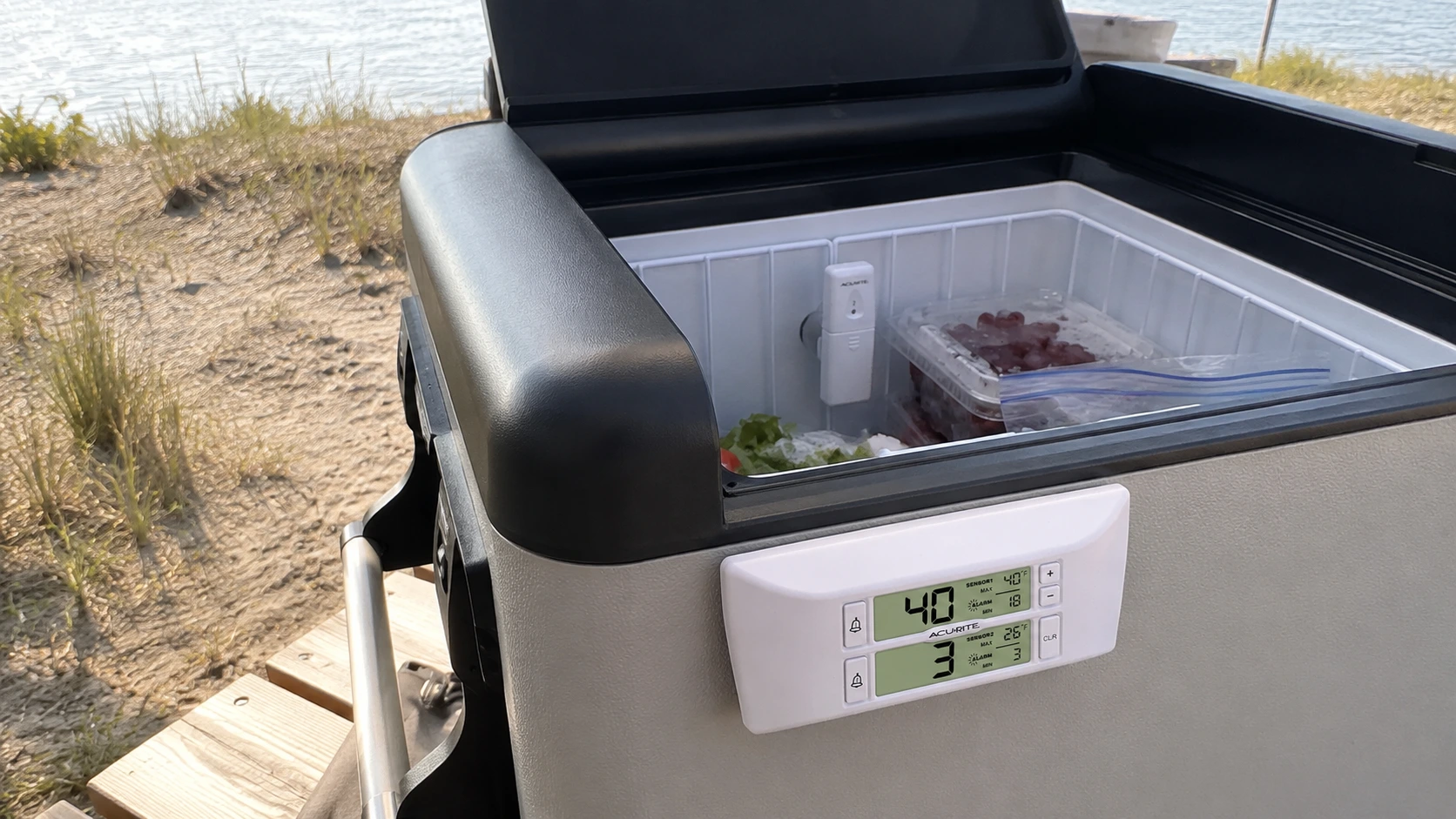
A two-sensor wireless thermometer that shows current temperature, high and low records, and programmable out-of-range alerts on a separate digital display.
BrandAcuRite
Temperature monitoring
- Sensors
- 2 wireless sensors
- Measurement range
- -40°F to 100°F (-40°C to 37°C)
- Units
- Fahrenheit or Celsius
- Update interval
- 90 seconds
Alerts and records
- Temperature alarms
- Programmable audible and visual high/low alerts
- Recorded values
- All-time high and low records
- Display
- Separate digital monitor
Wireless and mounting
- Wireless range
- Up to 75 ft (23 m)Actual range varies with sensor placement and surrounding materials.
- Wireless frequency
- 433 MHz
- Display mounting
- Magnet or wall keyhole
- Sensor mounting
- Shelf clip and detachable suction cup
Power
- Display batteries
- 2 × AAA
- Sensor batteries
- 2 × AA per sensor
- Total batteries
- 2 × AAA and 4 × AA
Best for
- Monitoring two compartments or a fridge and freezer from one display
- Troubleshooting temperature swings without repeatedly opening the lid
- Users who want high/low records and programmable alerts
Not ideal for
- App-based or cloud data logging
- Outdoor exposure without weather protection
- Laboratory calibration or certified temperature recording
Pros
- Two wireless temperature sensors
- Programmable audible and visual alarms
- High and low temperature records
- Several display and sensor mounting options
Cons
- Requires six batteries across the display and sensors
- No phone app or historical graph
- Wireless range depends on placement and surrounding materials
Place a sensor where it represents the contents rather than touching an evaporator surface. For food-safety decisions, follow the thermometer instructions and FDA guidance. A separate sensor can reveal the symptom; it cannot identify every electrical or refrigeration fault by itself.
How should you perform a safe restart?
Use the restart procedure in the exact model manual. When no special sequence is stated, a cautious general approach is:
- Record the error code and settings.
- Switch the fridge off using its control.
- Disconnect the power source.
- Inspect the plug, cable, vents, and lid.
- Allow the waiting period specified by the manufacturer before reconnecting.
- Reconnect to a known compatible source.
- Set one clear refrigerator target and monitor the result.
Do not repeatedly cycle power every few seconds. Compressors and control electronics may include delays that prevent immediate restart.
A restart is a diagnostic step, not a repair. If the same error returns, preserve the evidence and move to the manufacturer support process.
When should you stop troubleshooting and contact support?
Contact the manufacturer or a qualified service provider when:
- the compressor never starts on a confirmed compatible source;
- an error code returns after the manual’s checks;
- the cabinet cannot approach the setpoint with adequate ventilation and a modest cold load;
- the fan is obstructed, damaged, or not operating as described;
- the unit has refrigerant odor, oily residue, impact damage, or unusual heat;
- the power connector, adapter, or wiring overheats;
- the controller resets repeatedly;
- a sensor reading is implausible and does not respond to normal conditions;
- the fridge is within warranty and further disassembly could affect coverage.
Do not open a sealed refrigeration circuit or attempt refrigerant work. That requires appropriate equipment and training.
FAQ
Why is my 12V fridge running but not getting cold?
The most common areas to check are setpoint, power stability, ventilation, lid closure, warm contents, and low-voltage protection. A running fan does not necessarily mean the compressor is operating.
How long should a portable fridge take to cool?
There is no universal time. Cabinet size, ambient temperature, starting temperature, food load, setpoint, mode, and power source all affect pull-down. Use the model documentation and monitor the actual compartment temperature.
Why does the display say 32°F while the food is warmer?
The display may show the setpoint or a sensor located in a colder part of the cabinet. Air temperature also changes faster than dense food. Use a separate thermometer placed appropriately.
Can blocked vents stop a portable fridge from cooling?
Yes. The refrigeration system must reject heat. Blocked or recirculating airflow can increase run time and reduce cooling performance.
Should I use MAX mode when the fridge is not cooling?
MAX mode may increase compressor activity, but it cannot fix low voltage, a blocked vent, an open lid, or a refrigeration fault. Diagnose those conditions first.
Why does the fridge cool on AC but not in the car?
The vehicle outlet, socket, cable, or battery may be delivering insufficient voltage under load. Compare the DC path with the known working AC setup and stay within the circuit ratings.
Can a bad gasket be repaired?
Follow the manufacturer guidance. Cleaning or reseating may solve minor issues, while cuts or permanent deformation may require a replacement part.
Is food safe if the fridge stopped cooling overnight?
Safety depends on the actual temperature and time. The FDA recommends keeping refrigerated food at 40°F or below. When the history is uncertain, follow official food-safety guidance rather than guessing.